 Pin It
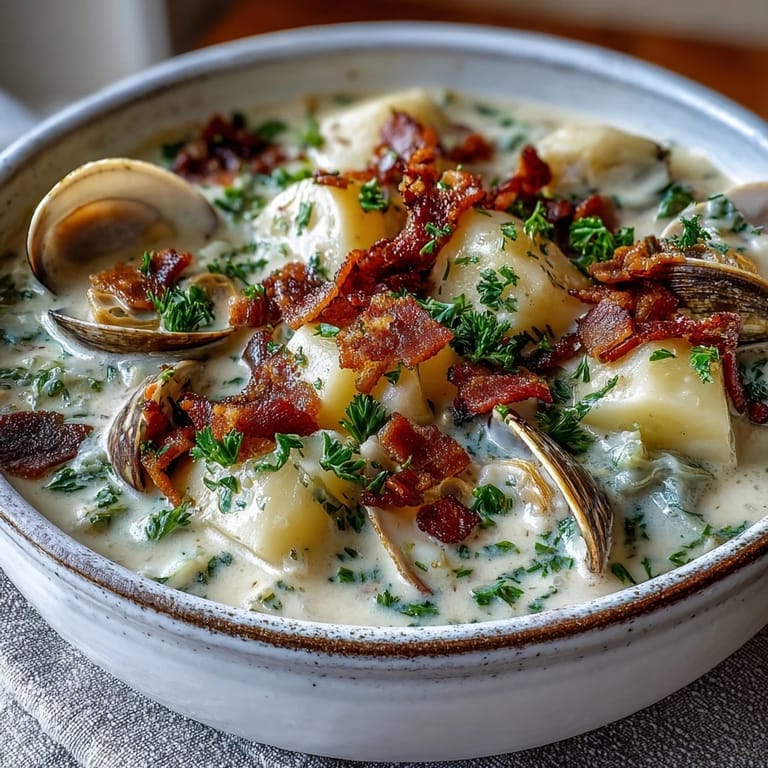
 My grandmother kept a handwritten recipe card for clam chowder wedged between her cookbook pages, the edges worn soft from decades of handling. She made it every October when the weather turned crisp, and the smell of bacon and clams simmering would drift through her kitchen like an old friend stopping by. I didn't appreciate it as a kid, too busy wanting something sweeter, but one gray afternoon in her kitchen, watching her hands move through the motions with such quiet certainty, something clicked. Now when I make this soup, I'm standing in that moment again, recreating something that feels both deeply personal and timelessly New England.
I brought this chowder to a potluck at work once, and a colleague who grew up in Maine nearly got emotional tasting it. He said it transported him back to his childhood home, to a specific restaurant his family loved. That's when I realized this soup holds memory—it's not just food, it's a portal to something meaningful for so many people. Every spoonful carries that New England coastal charm, that sense of belonging to a place and time.
Ingredients
- Fresh clams (littlenecks) or canned chopped clams: Fresh clams give you the most control and that briny, ocean-forward flavor, but canned works beautifully when you're short on time—just don't skip the reserved juice.
- Yukon Gold or russet potatoes: Yukon Golds hold their shape better and add a buttery undertone, while russets break down slightly and thicken the chowder naturally.
- Salt pork or bacon: This renders fat that becomes the flavor foundation; it's not optional if you want authentic depth.
- Heavy cream and whole milk: The combination gives you richness without overwhelming creaminess, but you can adjust the ratio if you prefer it lighter or more luxurious.
- All-purpose flour: This creates a roux that thickens the chowder to that perfect, spoonable consistency without cornstarch grittiness.
- Fresh parsley: Added at the end, it brings brightness and a fresh herbaceous note that cuts through the richness.
Tired of Takeout? 🥡
Get 10 meals you can make faster than delivery arrives. Seriously.
One email. No spam. Unsubscribe anytime.
Instructions
- Steam the clams (if using fresh):
- Scrub your clams under cold running water to remove grit, then place them in a large pot with 1 cup of water. Cover and steam over medium heat until the shells crack open, about 6 to 8 minutes—listen for that gentle hiss and watch for shells popping. Discard any clams that stubbornly refuse to open; they weren't meant to be eaten.
- Render the salt pork:
- Dice your salt pork or bacon into small pieces and cook it slowly in your Dutch oven over medium heat until the fat releases and the meat turns crispy. Remove it with a slotted spoon, leaving all that precious fat behind—this is liquid gold for flavor.
- Build your aromatic base:
- Add butter to the pot and let it melt into the rendered fat, then add your diced onion and celery. Sauté gently for about 5 minutes until they're soft and translucent but not brown; you want to coax out their sweetness, not caramelize them.
- Make the roux:
- Sprinkle the flour over your softened vegetables and stir constantly for about 2 minutes, letting the flour toast slightly and absorb all that fat. You'll smell it cooking—that's when you know it's ready.
- Create the creamy base:
- Slowly whisk in your clam juice, milk, and cream, stirring constantly to prevent lumps from forming. The mixture should look smooth and silky as you pour it in, with no flour streaks remaining.
- Simmer the potatoes:
- Add your diced potatoes along with the bay leaf and dried thyme, then let everything simmer gently, uncovered, for 12 to 15 minutes until the potatoes are tender enough to break with a wooden spoon. Stir occasionally so nothing sticks to the bottom.
- Add the clams and bacon:
- Once the potatoes are done, add your chopped clams (whether fresh or canned) and the reserved cooked bacon back into the pot. Simmer gently for just 3 to 5 minutes—you're not trying to cook the clams further, just warm them through and let their flavor mingle with everything else.
- Finish and season:
- Remove the bay leaf, stir in your fresh parsley, then taste and adjust the salt and pepper carefully. Remember that the clam juice and bacon already bring saltiness, so you might need less than you'd expect.
 Pin It
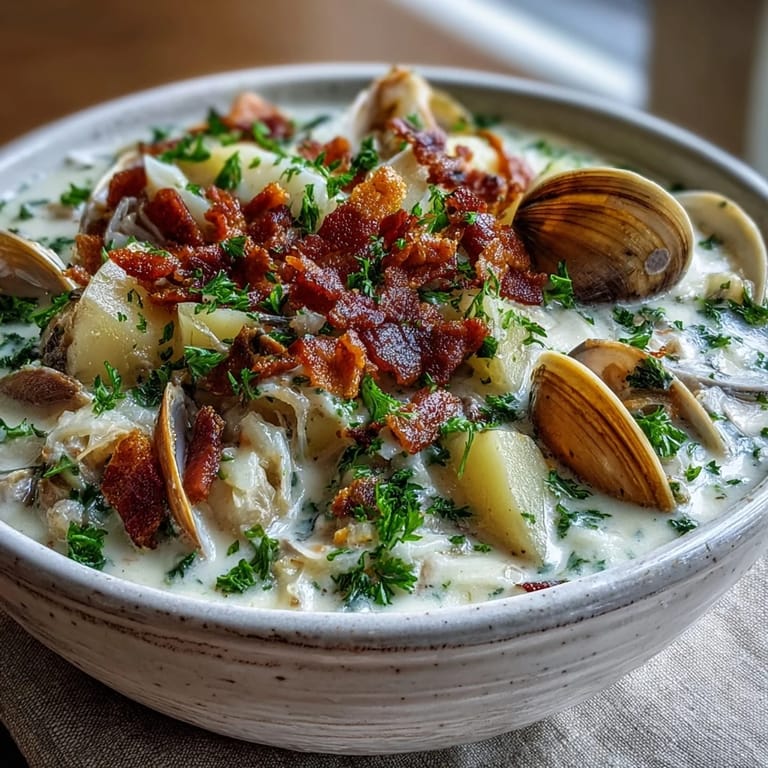
 There's a moment when you're stirring this soup and the butter catches the light, the cream swirls into clouds, and you suddenly smell the ocean in your kitchen. That's when you know you've got something special—something that tastes like heritage and comfort wrapped together in a bowl. It's the kind of meal that makes people linger at the table and ask for seconds.
Fresh vs. Canned Clams: What Actually Matters
I used to think fresh clams were non-negotiable, but I learned the hard way that timing and quality matter more than the label. Fresh clams need to be steamed immediately and handled carefully, while canned clams are already cooked and just need gentle warming. If you're buying fresh clams, check that they're tightly closed and smell briny, not fishy—if they're gaping open at the fishmonger, they're already stressed. Canned clams, on the other hand, are flash-cooked at their peak and frozen or canned right away, so they hold their quality beautifully. The real secret is using the reserved clam juice from either option; that briny liquid is where all the ocean flavor lives.
The Potato Game
Potatoes are the silent hero of this chowder, and cutting them the right way changes everything. Dice them uniformly so they cook at the same pace—about half-inch cubes works perfectly. If you cut some pieces too large and others too small, you'll end up with mushy bits and hard bits in the same bowl, which feels like a failure even though the soup still tastes good. Peel them right before adding them to the pot so they don't oxidize and turn gray, and add them at the exact moment your base is ready to simmer, not before.
Achieving Perfect Consistency Every Time
The thickness of your chowder depends on how much flour you use in your roux and how long you simmer it. If it turns out too thick, you can always add a splash of milk or clam juice at the end. If it's too thin, let it simmer a bit longer—the potatoes will continue to release their starches and naturally thicken it. I've learned that consistency preferences are personal; some people want it thick enough to coat a spoon, while others prefer it pourable.
- Make your roux with equal parts butter and flour (2 tablespoons each) for a medium thickness that's forgiving.
- If you accidentally make lumps when adding the liquid, strain the whole pot through a fine sieve and start fresh with the cream—it's easier than fighting it.
- Taste the chowder before serving and adjust salt and pepper last, because the clam juice is naturally salty and flavors intensify as it cools.
 Pin It
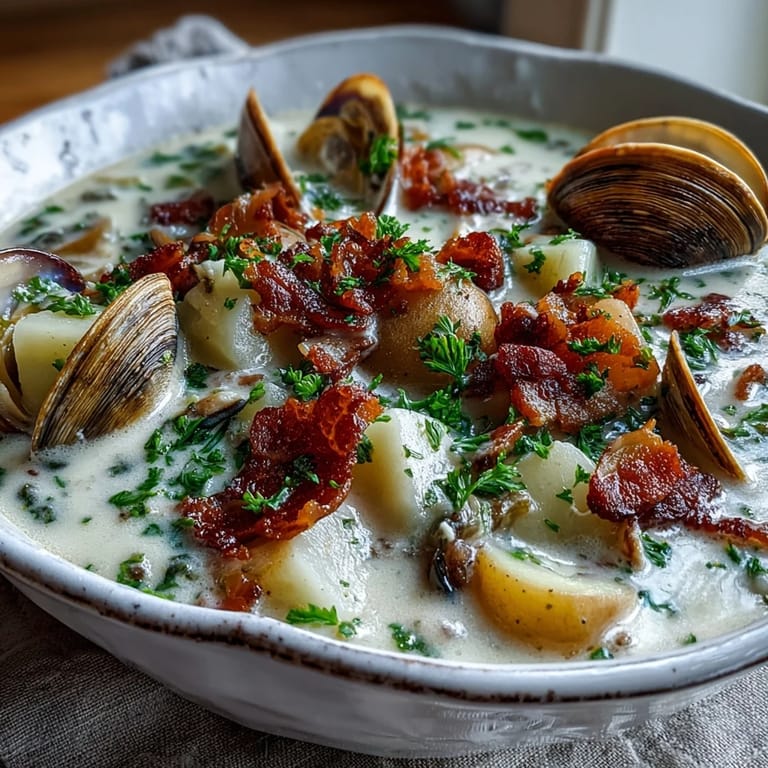
 This chowder gets better the next day as flavors settle and blend, so it's a perfect make-ahead dish for entertaining. Ladle it into bowls, top with oyster crackers and fresh parsley, and watch everyone slow down to really taste what you've made.
Recipe FAQs
- → Can I use canned clams instead of fresh?
Yes, canned clams work beautifully. Use 2 cups of chopped clams with their juice, which replaces part of the bottled clam juice. This saves time while maintaining excellent flavor.
- → What type of potatoes work best?
Yukon Gold or russet potatoes are ideal. Yukon Golds offer a creamy texture and buttery flavor, while russets provide a fluffier consistency. Both hold their shape well during simmering.
- → Can I make this chowder lighter?
Substitute half-and-half for the heavy cream to reduce richness while maintaining creaminess. You can also use turkey bacon instead of salt pork for fewer calories and less fat.
- → How do I prevent the chowder from curdling?
Avoid boiling once the dairy and clams are added. Keep the heat at a gentle simmer and stir occasionally. High heat can cause the cream to separate and the clams to become rubbery.
- → What should I serve alongside this chowder?
Traditional oyster crackers are classic, but crusty sourdough bread, garlic bread, or a simple green salad also pair wonderfully. A crisp white wine like Sauvignon Blanc complements the seafood beautifully.
- → How long can I store leftover chowder?
Store in an airtight container in the refrigerator for up to 3 days. Reheat gently over low heat, stirring frequently. Avoid freezing as the dairy and potatoes can separate and become grainy.