 Pin It
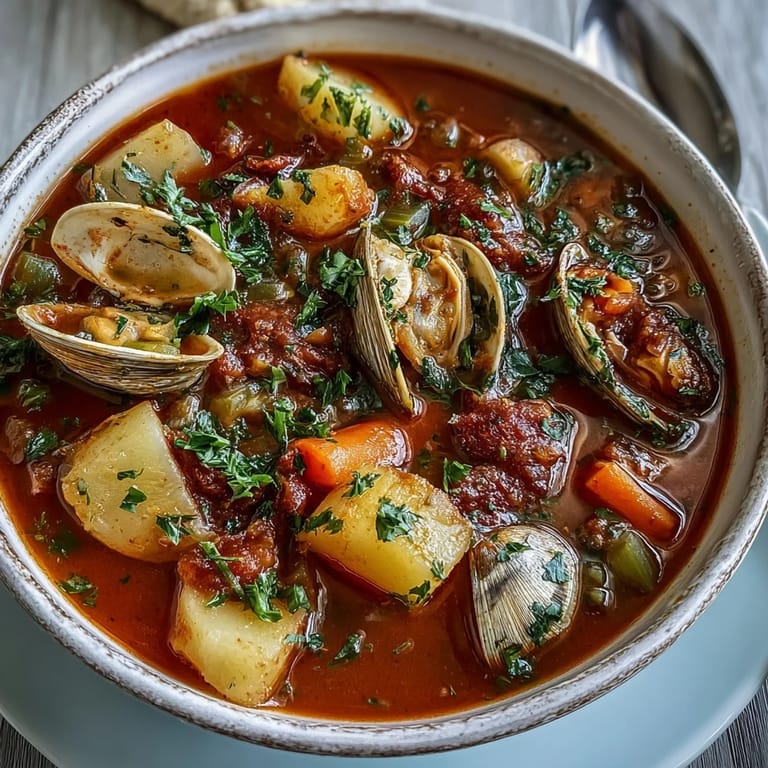
 There's something about a steaming bowl of Manhattan clam chowder that stops conversations mid-sentence. My first real encounter with it wasn't at some fancy restaurant—it was watching my neighbor ladle it from a battered pot on a chilly October evening, steam curling up as she added a handful of fresh parsley. The tomato-based broth was nothing like the cream-heavy New England version I'd grown up with, and that first spoonful felt like discovering a completely different dish. What struck me was how bright and alive it tasted, how the clams seemed to sing against the acidic tomatoes and tender potatoes. I've been chasing that feeling ever since.
I made this for my sister during her first winter in the city, when she was homesick and tired of takeout. We crowded around the stove while it simmered, and I let her do the vegetable chopping even though she was slow about it—something about the rhythm of knife against cutting board seemed to settle her. When we sat down to eat, she got quiet in that way people do when food actually reaches them, and by the third spoonful she was smiling. That's when I knew this recipe was worth keeping.
Ingredients
- Fresh clams (2 pounds littlenecks) or canned clams (3 cups): Fresh clams give you that briny juice to work with, but canned clams save you the steaming step and still deliver real flavor—I've used both depending on my mood and what the market has.
- Clam juice (3 cups): This is your liquid foundation, and reserving the juice from steaming fresh clams makes the broth taste like you actually know what you're doing in the kitchen.
- Diced tomatoes (28-ounce can): Canned tomatoes are actually more reliable than fresh here because they're picked ripe and processed at peak flavor—don't apologize for using them.
- Olive oil (2 tablespoons): Just enough to coat the pot and soften your vegetables without making the soup greasy.
- Onion, celery, carrots, and green bell pepper: This holy trinity of aromatics is your flavor base, and dicing them small means they soften quickly and distribute evenly throughout the pot.
- Yukon gold potatoes (3 medium): These waxy potatoes hold their shape instead of falling apart, giving you actual texture in each spoonful.
- Garlic (3 cloves, minced): Add it after the softer vegetables have had their head start, or it'll burn and turn bitter.
- Dried thyme and oregano (1 teaspoon each): These dried herbs are sturdy enough to survive a long simmer without fading.
- Bay leaves (2): Remove them before serving—I learned this the hard way when someone bit down on one at a dinner party.
- Red pepper flakes (½ teaspoon, optional): A whisper of heat that wakes up all the other flavors without overpowering them.
- Kosher salt and black pepper: Taste as you go because clam juice is already salty, and you don't want to oversalt by accident.
- Fresh parsley (2 tablespoons, chopped): Scatter it on just before serving so it stays bright green and herbaceous.
Tired of Takeout? 🥡
Get 10 meals you can make faster than delivery arrives. Seriously.
One email. No spam. Unsubscribe anytime.
Instructions
- Prepare your clams if using fresh:
- Scrub them under cold running water with a stiff brush to remove any sand or grit from the shells. Place them in a large pot with 1 cup of water, cover with a lid, and steam over medium-high heat for 5 to 7 minutes—you'll hear them start to pop open, and that's your signal to stop. Remove the meat and chop it into bite-sized pieces, then strain the cooking liquid through a fine mesh strainer to catch any lingering sand before adding it to your chowder.
- Build your flavor base:
- Heat olive oil in a heavy-bottomed pot over medium heat and add your chopped onion, diced celery, carrots, and green bell pepper. Let them soften for about 6 to 8 minutes, stirring occasionally so nothing sticks or browns—you want them tender and fragrant, not caramelized.
- Wake up the pot with garlic:
- Stir in your minced garlic and cook for just 1 minute until you smell that pungent, warm garlic perfume rising from the pot. This timing matters because garlic burns quickly and tastes bitter if you let it go too long.
- Combine everything and bring it to life:
- Add your diced potatoes, the canned tomatoes with their juice, your clam juice, the reserved cooking liquid from fresh clams (if using), dried thyme, oregano, bay leaves, red pepper flakes if you're using them, salt, and black pepper. Stir everything together so the flavors can start getting to know each other, then turn up the heat and bring the whole pot to a boil.
- Let it simmer into something special:
- Once it's boiling, reduce the heat to medium-low and let it bubble gently for 20 to 25 minutes, stirring occasionally. The potatoes will soften and start to break down slightly at the edges, which actually helps thicken the broth naturally.
- Add the clams back home:
- Gently stir in your chopped clams and let them warm through for 3 to 5 minutes—you don't want to boil them or they'll become rubbery and tough. This is also when you taste and adjust the seasoning, remembering that a little extra salt at the end can make all the difference.
- Finish and serve:
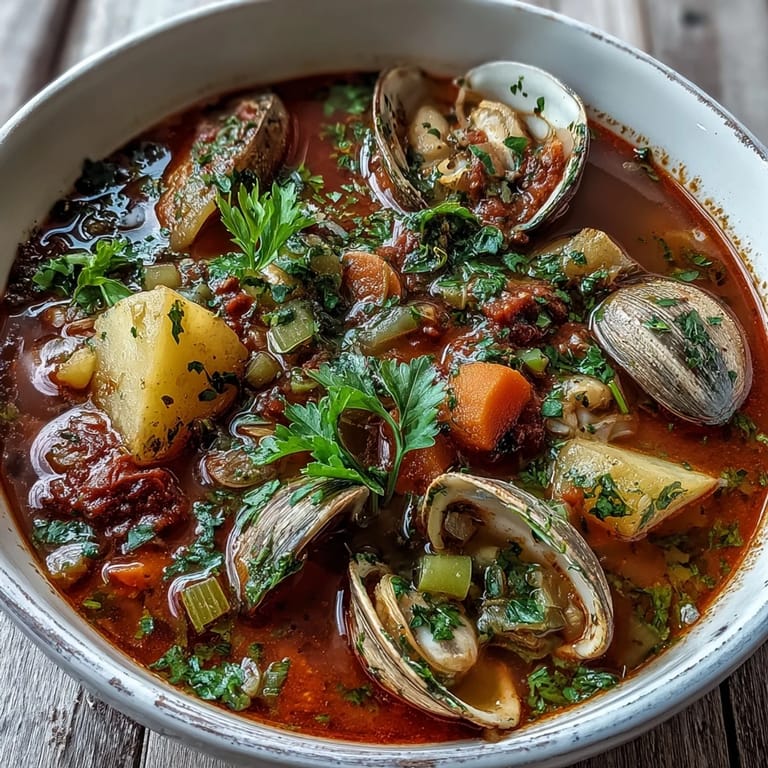
- Remove the bay leaves with a spoon and discard them, then ladle the chowder into bowls and scatter fresh parsley over the top. Serve it hot with crusty bread or oyster crackers for soaking up every last drop of that incredible broth.
 Pin It
 I served this to my ex-boyfriend years ago when he was sick and stuck on my couch, and he said it was the first thing that actually tasted like something since he'd gotten ill. I think about that sometimes when I'm standing at the stove, chopping vegetables and waiting for water to boil—how a simple bowl of soup can mean something bigger than just dinner.
Why Manhattan Over New England
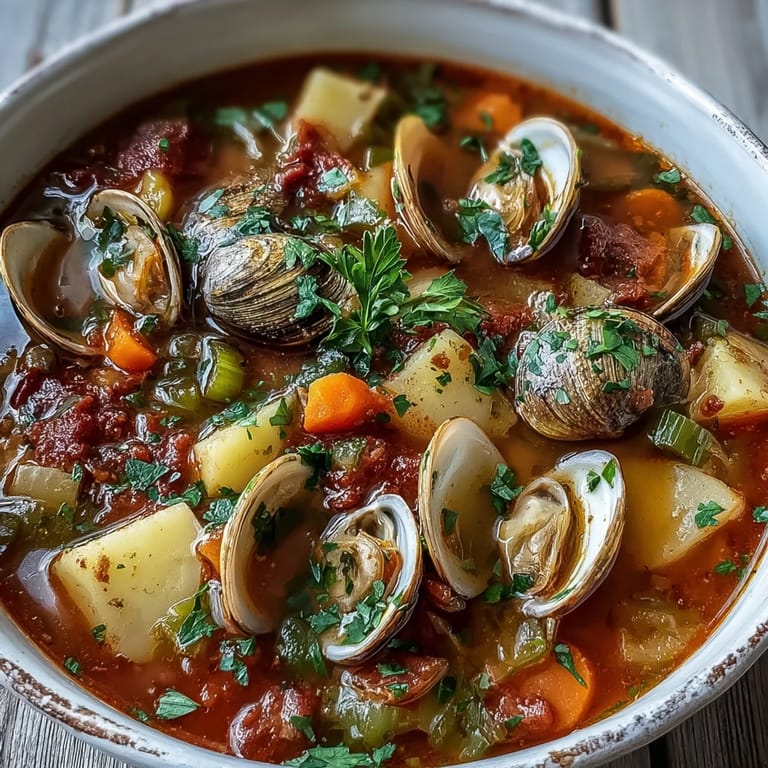
The difference between Manhattan and New England clam chowder comes down to philosophy. New England leans into cream and butter, all richness and comfort, while Manhattan says yes to tomatoes and lets them shine bright and tart against the sweetness of the broth. I used to be a purist about New England versions until someone explained to me that Manhattan chowder actually has more history in America, and it's the original recipe that got brought over by Italian immigrants who understood how to let tomatoes do the heavy lifting. Once I tried it that way, I couldn't go back—there's something about the acidity that makes the clams taste more like themselves.
The Clam Question: Fresh Versus Canned
Fresh clams are beautiful to work with when you can get them, and there's something satisfying about steaming them yourself and listening for that pop when they open. But canned clams are not a defeat—they're actually convenient and consistent, already chopped and ready to go, and they taste distinctly of the sea without any of the fuss. I've made this soup both ways for different situations: fresh clams when I have time and want to feel like I'm cooking something special, canned clams when it's Tuesday night and I just want dinner on the table. Both are legitimate, and both taste delicious.
Serving and Storage Wisdom
This chowder actually gets better the next day when the flavors have had time to mingle and deepen, so don't hesitate to make it ahead. Store it in the refrigerator for up to 3 days, and when you reheat it, do so gently over medium heat with a splash of water or extra clam juice to loosen it up—aggressive heat will toughen the clams and make the broth taste flat.
- Oyster crackers are traditional, but crusty sourdough bread is my preference because it soaks up more of that incredible broth.
- If you want to add bacon, cook it until crispy, chop it, and scatter it on top of each bowl instead of stirring it in, so people can taste the smoke without it overwhelming the delicate clam flavor.
- Fresh parsley makes a real difference, so don't skip it or substitute dried—the brightness of fresh herbs is what makes the last spoonful as good as the first.
 Pin It
 This is the kind of soup that makes you feel capable in the kitchen, even if you're still learning. Serve it when you want to show up for someone, and watch how they pause and actually taste it.
Recipe FAQs
- → Can I use canned clams instead of fresh?
Yes, canned chopped clams work perfectly. Use 3 cups drained clams and reserve the juice to supplement your clam broth. This saves significant preparation time while maintaining excellent flavor.
- → What type of potatoes work best?
Yukon gold potatoes are ideal as they hold their shape during simmering and offer a buttery texture. Russets can be used but may break down more, creating a thicker consistency.
- → How can I make this chowder spicier?
Increase the crushed red pepper flakes to 1 teaspoon, or add a diced jalapeño with the vegetables. A dash of hot sauce when serving also enhances the heat without overwhelming the seafood flavors.
- → Can I prepare this ahead of time?
This chowder stores well refrigerated for up to 3 days. Add the clams during reheating rather than initial cooking to prevent them from becoming tough. The flavors actually deepen overnight.
- → What's the difference between Manhattan and New England clam chowder?
Manhattan style features a clear, tomato-based broth that's lighter and tangier, while New England uses cream for a rich, white appearance. Manhattan includes more vegetables and offers a brighter, vegetable-forward profile.
- → Can I add other seafood?
Absolutely. Diced fish, shrimp, or scallops complement the clams beautifully. Add firmer fish with the potatoes and delicate seafood like shrimp during the final 5 minutes to prevent overcooking.