 Pin It
 My coworker brought this Korean ground beef bowl to lunch one Tuesday, and the whole office smelled like toasted sesame and ginger for the rest of the afternoon. She caught me eyeing her bowl and laughed, saying it takes barely longer than ordering takeout but tastes infinitely better. That pickled crunch on top completely won me over—it felt like eating something both comforting and bright at the same time. I went home that evening determined to recreate it, and honestly, I've been making it weekly ever since.
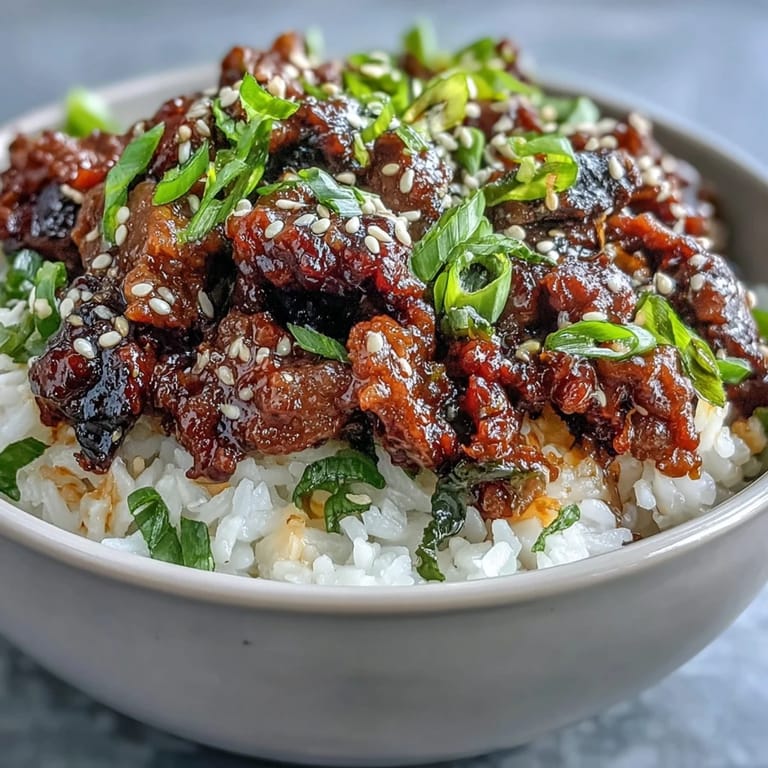
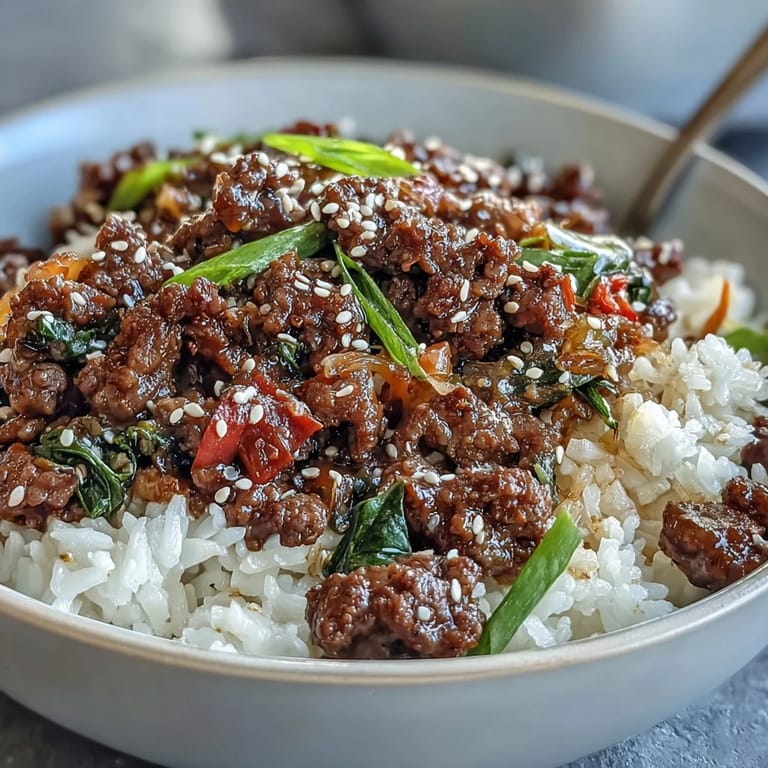
I made this for my partner on a Friday when we were both too tired to think about dinner, and watching their face light up as they took the first bite reminded me that good food doesn't need to be complicated. The bowl sat there looking almost too vibrant to eat, with those green onions scattered across the top like confetti, but once we dug in, it disappeared within minutes. We looked at each other with full mouths and just nodded—no words needed.
Ingredients
- Lean ground beef, 500 g: Choose beef that's not too lean or you'll miss the richness that makes this bowl sing, but not too fatty either or you'll spend time draining excess oil.
- Soy sauce, 2 tablespoons: This is where the savory depth lives—use tamari if you're going gluten-free and don't feel like you're compromising anything.
- Toasted sesame oil, 1 tablespoon: The real deal here, not the light kind; that smoky warmth is non-negotiable.
- Brown sugar, 1 tablespoon: It balances the saltiness and creates this subtle glaze that coats each bite.
- Freshly grated ginger, 2 teaspoons: Fresh is crucial because powdered ginger won't give you that bright, almost spicy warmth that cuts through everything.
- Garlic, 3 cloves minced: Mince it fine so it disappears into the sauce and flavors every strand of beef.
- Gochujang or sriracha, 1 teaspoon optional: Start with half if you're heat-shy; you can always add more but you can't take it back.
- Green onions, 2 stalks sliced: The freshness here matters as much as the flavor—it's your final flourish.
- Sesame seeds, 1 tablespoon: Toast them yourself if you have time; the difference is remarkable.
- Cooked jasmine or cauliflower rice, 4 cups: Jasmine rice soaks up the sauce beautifully, but cauliflower rice works if you're keeping it light.
- Carrot, 1 cup julienned: The thinner you cut it, the faster it pickles and the better it absorbs that vinegar tang.
- Cucumber, 1 cup thinly sliced: Use an English cucumber if you can; fewer seeds means less water watering down your pickling liquid.
- Radish, 1/2 cup thinly sliced: This is the secret weapon—that peppery crunch is what makes people ask for the recipe.
- Rice vinegar, 1/2 cup: Don't skip this or substitute; its gentleness is exactly what you need for quick pickling.
- Sugar and salt for pickling: These two dissolve completely and transform raw vegetables into something almost addictive.
Tired of Takeout? 🥡
Get 10 meals you can make faster than delivery arrives. Seriously.
One email. No spam. Unsubscribe anytime.
Instructions
- Start the pickles first:
- In a bowl, whisk together rice vinegar, sugar, and salt until the sugar completely dissolves—you'll know it's ready when you can't feel any grittiness against the spoon. Add your sliced carrot, cucumber, and radish, toss everything together, and let it sit.
- Get your rice ready:
- If you haven't already, cook your rice or cauliflower rice according to package directions and keep it warm on the stove or in a warm bowl covered with foil.
- Brown the beef:
- Heat a large skillet over medium-high heat and add your ground beef, breaking it apart with a spoon as it cooks—listen for that sizzle and watch for the color to shift from pink to deep brown, which takes about 5 to 7 minutes. If there's a lot of excess fat pooling, drain some of it out, but leave enough for flavor.
- Make the sauce:
- Add soy sauce, sesame oil, brown sugar, ginger, garlic, and gochujang if you're using it, stirring constantly so everything coats the beef evenly. Keep cooking and stirring for another 2 to 3 minutes until it smells absolutely incredible and the sauce clings to every bit of meat.
- Finish the beef:
- Take the skillet off the heat and stir in your sliced green onions and sesame seeds, letting the residual heat release their aromas without burning them.
- Build your bowls:
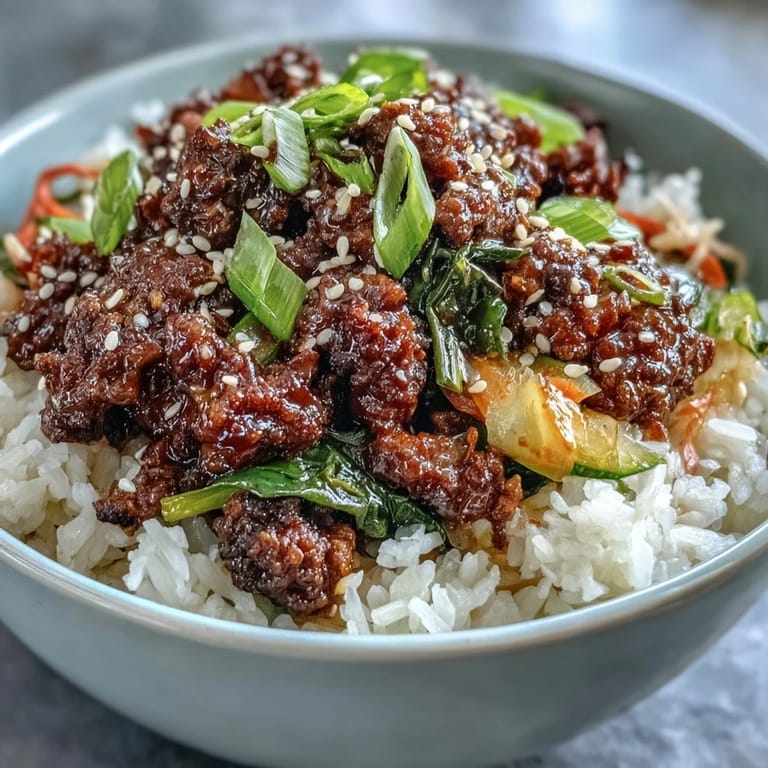
- Divide your warm rice among bowls, pile that seasoned beef on top, then add a generous handful of pickled vegetables with all their tangy liquid. The juice from the vegetables soaks into the rice and ties everything together.
- Garnish and serve:
- Scatter extra green onions and sesame seeds over the top and eat it immediately while everything is still warm and the pickles are still crisp.
 Pin It
 There was a moment when my roommate came home from work, opened the fridge, and asked if we were having Korean food from somewhere fancy. When I told her I made it, she sat down without even changing out of her work clothes and ate an entire bowl in complete silence. That quiet appreciation felt like the highest compliment a home cook could receive.
Why the Pickled Vegetables Are Everything
I learned the hard way that these aren't just a garnish—they're the entire reason this bowl works. The first time I made it, I skipped the pickling and just threw raw vegetables on top, and it tasted flat and one-dimensional. The next time, I followed the recipe exactly, and suddenly there was this brightness, this tang that made the savory beef taste even richer. The acid from the vinegar cuts through the richness of the sesame oil and wakes up your palate with every bite, and that crisp texture against the soft rice is what keeps you coming back for another spoonful.
Playing With Heat and Flavor
Gochujang is wonderful if you love that fermented chili depth, but sriracha works beautifully too if that's what you have in your pantry. Start conservative with whichever you choose—you're aiming for a background warmth, not a mouth-on-fire situation. If you accidentally add too much and regret it, a squeeze of honey or a touch more brown sugar can balance it out, though honestly, most people find they like it spicier than they expected once they actually taste it.
Making It Your Own
This bowl is beautifully flexible, which is part of why I make it so often. Swap the beef for ground turkey or chicken if you're looking to lighten it up, or go completely vegetarian with crumbled tofu or tempeh—they absorb the seasoning sauce just as well as meat does. If you want to push it even further into comfort food territory, crown each bowl with a fried egg; that runny yolk mixing into the warm rice is absolutely transcendent.
- For a low-carb version that tastes just as good, cauliflower rice is genuinely excellent here, not a compromise.
- Make extra pickled vegetables and keep them in the fridge for up to a week to throw on other bowls or sandwiches.
- If time is really tight, you can pickle the vegetables while the rice cooks and the beef browns simultaneously.
 Pin It
 This bowl has become my go-to dinner when I want something that tastes like I spent hours in the kitchen but I'm actually done in half an hour. It feels special enough to serve to guests but simple enough to throw together on a random Tuesday after work.
Recipe FAQs
- → Can I make this bowl low-carb?
Yes, substitute cauliflower rice for the jasmine rice to reduce carbohydrates while maintaining all the savory flavors.
- → How spicy is this dish?
The spice level is mild to medium. Gochujang adds gentle heat, but you can adjust the amount or omit it entirely for a milder version.
- → Can I prepare the pickled vegetables in advance?
Absolutely. The quick pickled vegetables develop more flavor if made ahead and can be stored in the refrigerator for up to a week.
- → What protein alternatives work well?
Ground turkey or chicken make excellent lighter substitutes. For a vegetarian version, crumbled tofu or tempeh absorb the seasonings beautifully.
- → How do I store leftovers?
Store components separately in airtight containers. The beef keeps for 3-4 days, rice for 4-5 days, and pickled vegetables for up to a week in the refrigerator.
- → Is this gluten-free?
Use tamari instead of soy sauce and verify your gochujang is gluten-free to make this bowl completely gluten-free.