 Pin It
 There's something deeply satisfying about pulling a sheet pan from the oven and finding everything perfectly caramelized in one go—steak sizzling at the edges, vegetables collapsed into themselves with char marks that taste like pure comfort. I discovered this bowl method on a Tuesday night when I was too tired for the usual dance of multiple pans and timing everything just right. One sheet, one oven, and somehow it became the meal I keep coming back to when I want to feel like I actually know what I'm doing in the kitchen.
I made this for my partner on a particularly gray Sunday, and watching their face light up when they realized the rice had been cooking quietly on the side while we weren't thinking about it—that's when I knew this recipe had staying power. It's the kind of meal that feels both effortless and intentional, which is rare enough to deserve a permanent spot in rotation.
Ingredients
- Sirloin or flank steak (1 lb): Choose steak that's at least three-quarters of an inch thick so it stays tender inside while the outside gets that gorgeous crust; thinner cuts can toughen up in the oven's dry heat.
- Olive oil: You'll use it twice here—once for the steak's marinade and once for the vegetables—so don't skimp on quality since it carries so much of the flavor.
- Kosher salt and black pepper: The simplicity matters; these season the steak just enough to let its natural flavor shine through without overwhelming it.
- Garlic powder: A teaspoon might seem small, but it creates this subtle savory undertone that makes people ask what your secret is.
- Red and yellow bell peppers: The color combination isn't just pretty—red peppers are sweeter and add depth while yellow brings a brighter, lighter note.
- Red onion, sliced: The thin slices mean they'll caramelize rather than stay crisp, adding this jammy sweetness that balances the steak's richness.
- Zucchini, sliced into half-moons: Cut them this way so they create little cups that catch the pan juices and roast evenly on both sides.
- Cherry tomatoes, halved: Halving them exposes more surface area to the heat, which means better caramelization and more concentrated flavor.
- Italian herbs and smoked paprika: Together they create this warm, almost smoky blanket over the vegetables that ties everything together.
- Jasmine or basmati rice: Jasmine has this subtle floral note while basmati is more delicate and separated; either one absorbs the flavors around it beautifully.
- Water or low-sodium broth: Broth adds an extra layer of savory depth if you have it on hand, but water works perfectly fine and lets other flavors take center stage.
- Fresh parsley or cilantro: A sprinkle at the end adds this bright, almost peppery freshness that cuts through the richness and makes each bite feel lighter.
Tired of Takeout? 🥡
Get 10 meals you can make faster than delivery arrives. Seriously.
One email. No spam. Unsubscribe anytime.
Instructions
- Get your oven singing and prep your stage:
- Preheat to 425°F and line your sheet pan with parchment or foil—this step is pure prevention, saving you from charred-on cleanup later. The hot oven is crucial because it gives everything that initial sear that locks in flavors.
- Season the steak like you mean it:
- Toss it with olive oil, salt, pepper, and garlic powder, then let it sit while you work on the vegetables. This brief rest lets the seasonings start adhering to the meat rather than just sitting on the surface.
- Dress the vegetables with confidence:
- In a separate bowl, toss peppers, onion, zucchini, and tomatoes with olive oil, Italian herbs, paprika, and seasonings. The separate bowl prevents the steak from getting too wet and losing its ability to brown properly.
- Arrange like you're composing a painting:
- Spread vegetables in a single layer on the sheet pan, creating a vegetable bed, then nestle the steak on top. This arrangement ensures the steak gets direct heat while the vegetables cook slightly covered by it.
- Let the oven work its magic:
- Roast for 15–18 minutes for medium-rare, checking at the 15-minute mark because ovens vary wildly. If you want extra caramelization, broil for 2–3 minutes at the end, watching like a hawk so nothing burns.
- Cook rice with quiet intention:
- While everything roasts, rinse rice until the water runs clear—this removes excess starch and prevents gumminess. Bring water or broth to a boil with salt, add rice, cover, reduce heat to low, and let it steam undisturbed for 12–15 minutes.
- Rest and slice with purpose:
- Let the steak rest on a cutting board for 5 minutes so juices redistribute throughout instead of ending up on your plate. Slice thinly against the grain, which shortens the muscle fibers and makes each bite melt rather than chew.
- Compose your bowls with intention:
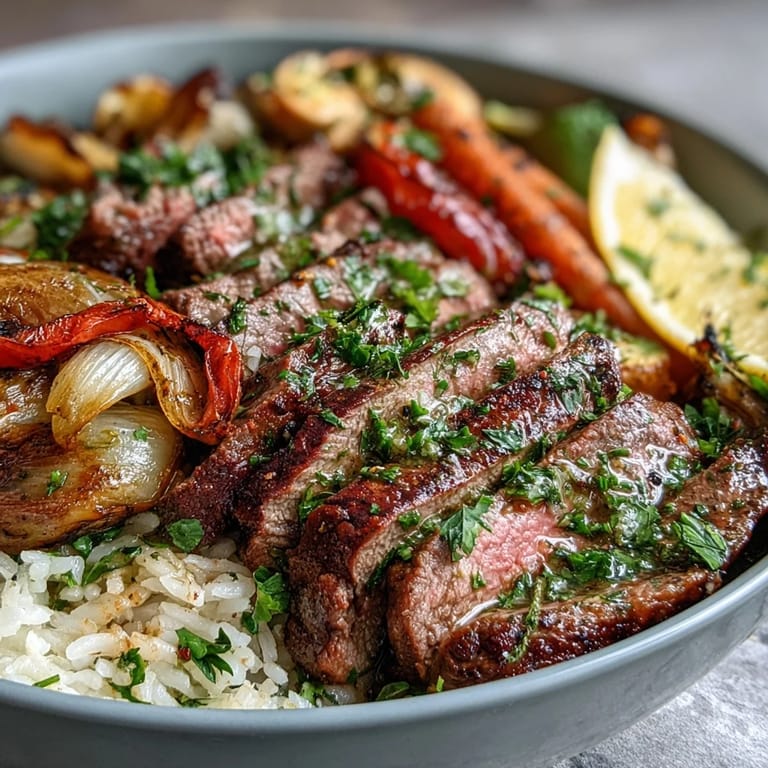
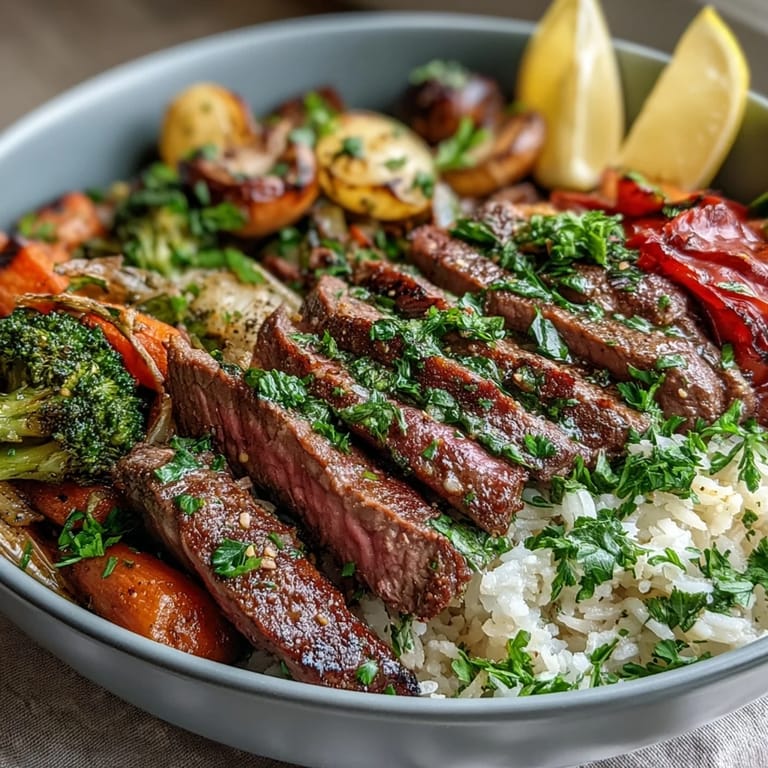
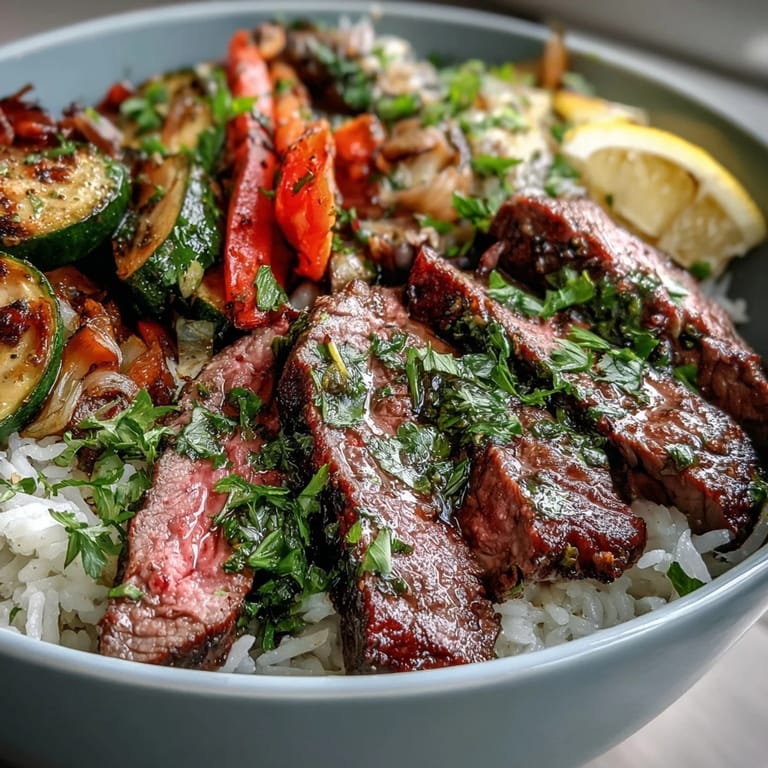
- Start with a bed of fluffy rice, crown it with roasted vegetables and steak slices, then drizzle with soy sauce and garnish with fresh herbs and lemon. The lemon wedges are essential—a squeeze brightens everything and adds acidity that balances richness.
 Pin It
 My younger cousin once said this meal made her feel like someone actually cared while cooking, because everything on the plate somehow worked together instead of feeling like separate components forced onto the same dish. That's when I realized this bowl is about more than convenience; it's about harmony.
Timing is Everything
The beauty of this recipe lives in its architecture of timing—the rice cooks quietly while the steak and vegetables get their main event under the broiler, so everything finishes within minutes of each other. I used to overcomplicate it by trying to have rice ready first, then cook the sheet pan, which meant either cold rice or cold vegetables by the time everything hit the bowl. Starting the rice halfway through the oven time feels almost alchemical in how it all comes together.
Building Flavor Layers
What makes this bowl special isn't one standout ingredient but rather how each element whispers a different note—the steak provides umami and richness, the caramelized vegetables add sweetness and char, the herbs bring brightness, and the lemon wedge ties it all together with acidity. I discovered this by accident when I forgot to put herbs on the vegetables one night and noticed how flat everything tasted without that layer. Now I treat the seasoning mix like it's as important as the main components, because honestly, it is.
Customization Without Compromise
This recipe welcomes swaps without falling apart—chicken breast works beautifully if you pound it thin so it cooks in the same timeframe, tofu takes on all the char and flavor if you press it first, and vegetables are endlessly flexible depending on what's in season or what you're craving. I've made this with broccoli and mushrooms when the farmers market inspired me differently, and each version felt just as satisfying as the original.
- Try adding fresh ginger or a touch of sesame oil if you want to lean toward an Asian-inspired flavor profile.
- Quinoa or cauliflower rice work perfectly if you're watching carbs without sacrificing satisfaction.
- A splash of balsamic vinegar instead of soy sauce brings an entirely different but equally delicious dimension.
 Pin It
 This bowl has become my answer when someone asks what I'm making for dinner and I want to sound impressive without actually spending hours at the stove. It's the meal that taught me that simple doesn't mean boring.
Recipe FAQs
- → What cut of steak works best for sheet pan cooking?
Sirloin and flank steak both work beautifully as they're relatively quick-cooking and stay tender. Flank offers great beefy flavor while sirloin tends to be more tender. Both slice nicely against the grain.
- → Can I use other vegetables in this bowl?
Absolutely. Broccoli florets, sliced mushrooms, asparagus pieces, or sweet potato cubes all roast well. Just keep pieces similarly sized so everything cooks evenly.
- → How do I know when the steak is done?
Use an instant-read thermometer for accuracy: 130-135°F for medium-rare, 140-145°F for medium. Remember the steak will continue cooking slightly while resting.
- → Can I make this dairy-free?
Yes, this bowl is naturally dairy-free. Just use tamari instead of soy sauce if you need to avoid gluten, and skip any cheese garnishes if they're suggested.
- → What other grains can I use instead of rice?
Quinoa adds extra protein, cauliflower rice keeps it low-carb, or try farro for a nutty chew. Just cook according to package directions and assemble as usual.
- → Why should I rest the steak before slicing?
Resting allows juices to redistribute throughout the meat, ensuring each bite stays juicy. Cutting immediately lets all those flavorful juices run out onto the cutting board instead.