 Pin It
 There's something about October afternoons that makes you crave tomato soup, and I learned that lesson the hard way when I showed up to a potluck with store-bought cans while my neighbor arrived with this silky, roasted version that made everyone forget about the store-bought option entirely. Since then, I've made it countless times, and the magic is always the same: those humble tomatoes transform into something almost luxurious when you give them time in a hot oven, their sweetness concentrating into pure, velvety comfort. This soup has become my answer to nearly everything—a rough day, unexpected guests, or just the need to feel like I'm taking care of myself.
I made this for my sister when she came home exhausted from a brutal week at work, and watching her eat that first spoonful—the way her shoulders dropped and she actually smiled—reminded me that sometimes the simplest gestures mean the most. She asked for the recipe that night, and now it's something we both make when we need to slow down together, even if we're just on the phone while cooking in our separate kitchens.
Ingredients
- Ripe tomatoes (1.5 lbs): Use tomatoes that smell like summer and feel heavy for their size, as they'll release more juice and flavor when roasted.
- Onion and garlic: Quartering and peeling them whole lets them caramelize evenly without burning, creating a gentle sweetness.
- Olive oil: Good quality here makes a real difference in the final depth of flavor.
- Smoked paprika: This is your secret weapon for complexity, though it's truly optional if you prefer pure tomato brightness.
- Vegetable broth: The liquid backbone that lets the roasted flavors shine without diluting them.
- Tomato paste: A tablespoon concentrates the tomato essence even further, grounding the soup.
- Heavy cream: The swirl that makes every spoonful feel indulgent, but don't stir it in completely—let it cloud the surface like fog.
- Fresh basil: Added before blending, it disappears into the soup and lifts everything with subtle brightness.
- Day-old bread: Stale bread holds its shape when toasted and won't absorb oil and turn soggy.
- Garlic powder and oregano for croutons: These seasonings toast alongside the bread, making each cube a little flavor bomb.
Tired of Takeout? 🥡
Get 10 meals you can make faster than delivery arrives. Seriously.
One email. No spam. Unsubscribe anytime.
Instructions
- Heat your oven and prepare the vegetables:
- Set the oven to 425°F and arrange your halved tomatoes cut side up on a baking sheet with the onion quarters and whole garlic cloves. Drizzle generously with olive oil and scatter salt, pepper, and paprika across everything—you want the vegetables to feel coated but not drowning.
- Toast the bread separately:
- While the vegetables start roasting, toss your bread cubes with olive oil, garlic powder, salt, and oregano on a separate sheet. You'll slip these into the oven after the vegetables have been going for about 15 minutes so the croutons finish golden just as the tomatoes peak.
- Let time do the work:
- After 25 to 30 minutes, your tomatoes should be slightly blackened at the edges and completely soft when pierced—this caramelization is where the magic lives. The croutons should sound crisp when you tap them.
- Build the soup base:
- Pour your roasted vegetables into a large pot along with the vegetable broth and tomato paste, stirring so the paste breaks up and distributes evenly. Let this simmer gently for 5 minutes to meld the flavors before you blend.
- Blend until silky:
- Add your basil leaves and use an immersion blender to work through the soup until it's completely smooth, or carefully transfer to a blender in batches if you prefer. The soup should look like liquid velvet.
- Finish with cream and seasoning:
- Return the soup to the pot and stir in your heavy cream—taste as you go because you might want to add a pinch of sugar if the tomatoes were particularly acidic, though this depends entirely on what you're using. Never let it boil after adding cream, just keep it gently warm.
- Serve with intention:
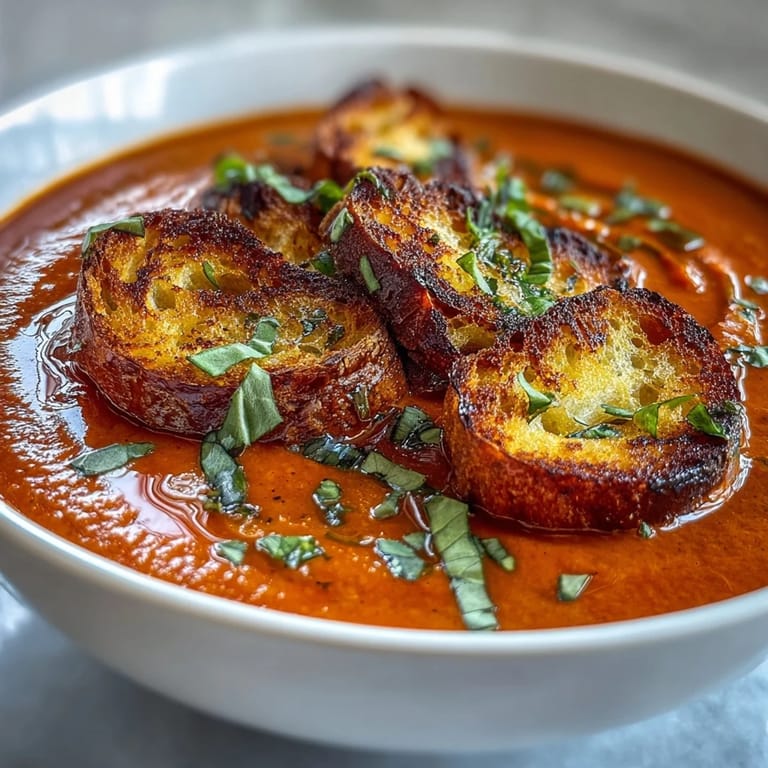
- Ladle into bowls and let each person's cream swirl bloom across the surface before adding a handful of croutons and a few basil leaves. The beauty is in the contrast—hot soup, cool cream, crisp bread.
 Pin It
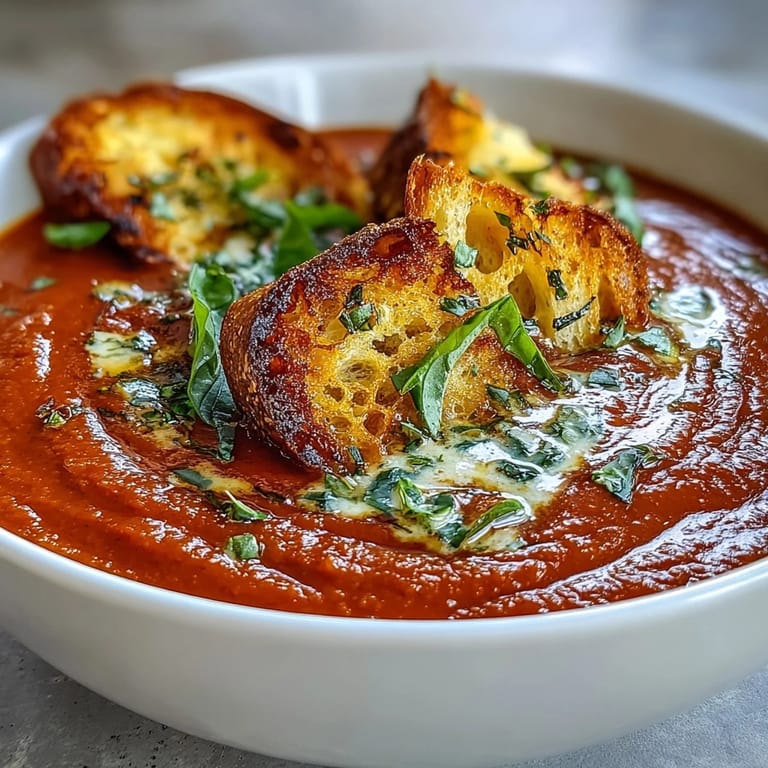
 There's a moment when you pour cream into hot soup and watch it create those beautiful clouds of color that never gets old, and I think that's partly why I keep making this. It's a small thing, but it reminds me that cooking doesn't have to be complicated to feel like an act of care.
Why Roasting Changes Everything
Roasting tomatoes instead of simply simmering them concentrates their sugars and deepens their flavor through what's called the Maillard reaction—basically, the high heat browns the tomato surfaces and creates new flavor compounds that raw or gently simmered tomatoes never develop. The difference is subtle but unmistakable once you've tasted both versions. I learned this almost by accident when my oven timer malfunctioned and I left tomatoes in longer than intended, only to discover that mistake had created something remarkably better.
Adjusting for Your Tomatoes
Not all tomatoes are created equal, and the time of year matters more than you'd think—summer tomatoes burst with juice and natural sweetness, while winter tomatoes might need a helping hand. This is where the sugar and tomato paste come in as balancing tools, not shortcuts. If you're using canned tomatoes mixed with fresh ones, reduce your broth slightly since canned tomatoes release more liquid as they cook, and taste your soup before serving rather than assuming it needs seasoning.
Croutons That Actually Stay Crisp
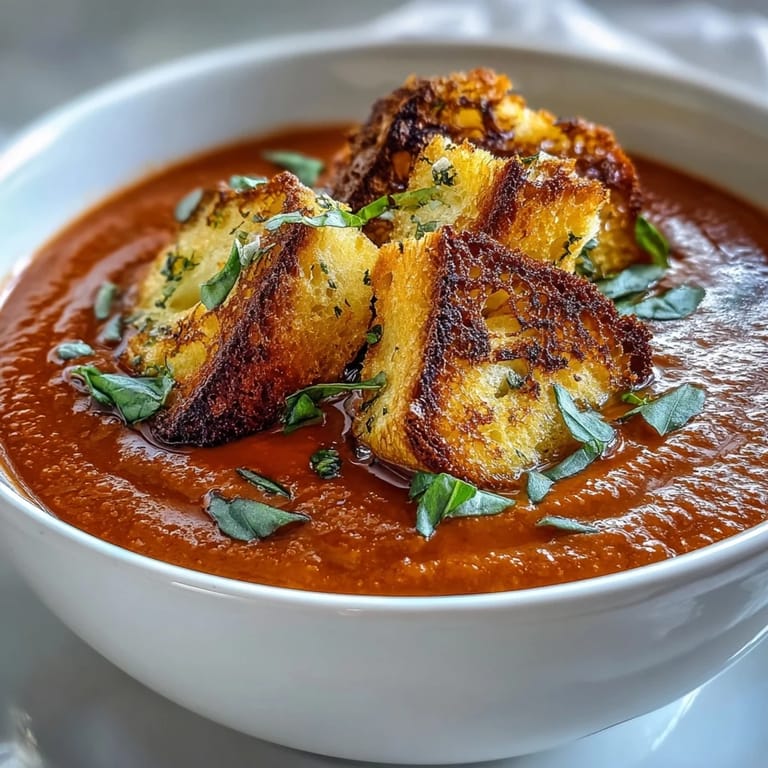
The secret to croutons that don't immediately surrender to the soup is starting with bread that's already a day old—fresh bread has too much moisture and will go soft almost instantly. Tossing them with seasonings before toasting means the flavors are baked in, not just sitting on the surface, and you'll find that stores them in an airtight container after they cool will stay crisp for at least two days. The real magic is adding them just before serving, so each person gets that textural contrast between the silky soup and the crisp bite of bread.
- Make extra croutons because they have a way of disappearing before the soup is even finished.
- If your bread isn't quite day-old, slice it and let it sit uncovered overnight before cutting into cubes.
- Toss any leftover croutons into salads or snack on them with your hands—they're too good to waste.
 Pin It
 This soup has become my go-to when I want to feel like I'm doing something nice for myself or for someone else, and the beautiful part is how little effort it actually requires. Once you've learned that roasting makes everything better, you'll find yourself using this same technique for so many other soups.
Recipe FAQs
- → Can I make this soup ahead of time?
Yes, this soup stores beautifully. Prepare it up to 3 days in advance and refrigerate in an airtight container. Reheat gently on the stovetop, adding a splash of broth if needed. Make croutons fresh before serving for best texture.
- → What type of tomatoes work best?
Ripe, in-season tomatoes deliver the best flavor. Roma or plum tomatoes work wonderfully for roasting. You can also use a combination of fresh and canned fire-roasted tomatoes for deeper, more complex flavor year-round.
- → How can I make this dairy-free?
Replace heavy cream with full-fat coconut cream, cashew cream, or your favorite plant-based cream alternative. The coconut cream adds richness without overpowering the tomato flavor.
- → Can I freeze the soup?
Absolutely. Freeze the soup before adding cream for up to 3 months. Thaw overnight in the refrigerator, reheat gently, then stir in the cream just before serving. Croutons should be made fresh.
- → Why add sugar to tomato soup?
Sugar balances the natural acidity of tomatoes, creating a more rounded flavor. Start with 1 teaspoon and adjust to taste. If your tomatoes are very sweet and ripe, you may not need any sugar at all.
- → What can I serve with this soup?
A classic grilled cheese sandwich makes the perfect pairing. Other great options include crusty artisan bread, a fresh green salad, or a simple caprese salad to complement the tomato flavors.