 Pin It
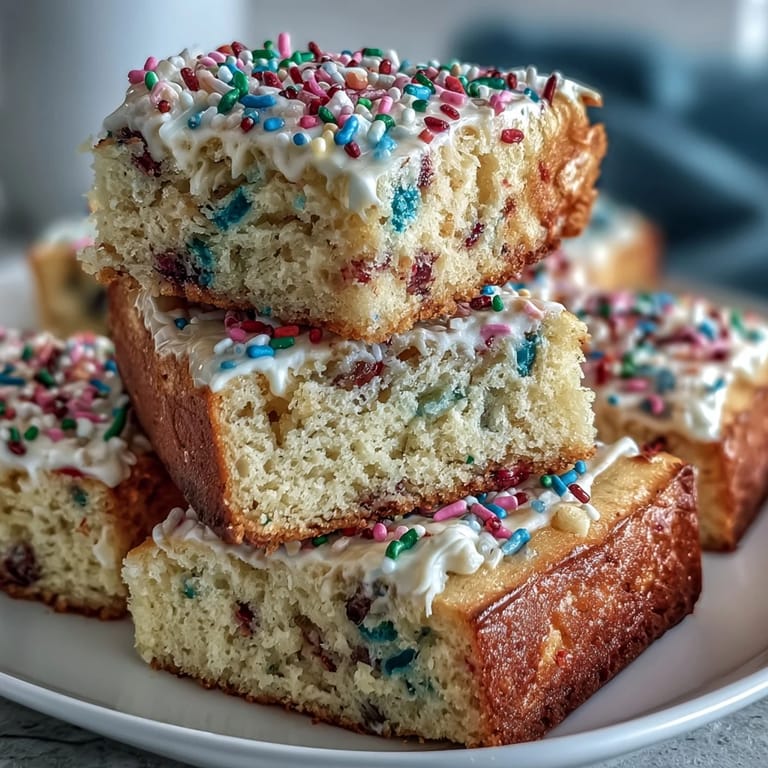
 My niece's birthday party was supposed to be outdoors until a surprise spring drizzle changed everything. We pivoted indoors, and suddenly I needed a cake that felt like sunshine and confetti rolled into one thing. That's when this Funfetti cake came together—not from memory or tradition, but from pure instinct. The first time I swirled those pastel buttercreams together, watching the soft pinks and blues meld into something almost cloud-like, I knew I'd stumbled onto something special.
My partner walked into the kitchen midway through frosting and actually gasped at the color combination. That moment of someone seeing something you've created and just... delighting in it without filter—that's what this cake does. It doesn't taste like showing off, which was the whole point.
Ingredients
- All-purpose flour (2 1/2 cups): This is your structure, so measuring by weight matters if you have a scale—packed flour can throw off your ratios and make the cake dense.
- Baking powder and baking soda (2 1/2 tsp and 1/2 tsp): Together they create the tender crumb; don't skip the soda or your cake will taste flat despite looking risen.
- Unsalted butter and sugar (1 cup and 1 1/2 cups): Room temperature butter creams properly, trapping air that gives you that light texture—cold butter means dense cake, every time.
- Eggs (4 large): Room temperature eggs incorporate smoothly into the butter mixture without breaking the emulsion; cold eggs can make the batter curdle.
- Vanilla extract (2 tsp): Pure vanilla matters here because the imitation stuff can taste slightly soapy against the delicate sweetness.
- Whole milk and sour cream (1 cup and 1/2 cup): The sour cream adds subtle tang that balances sweetness and keeps the cake moist; don't substitute with plain yogurt unless you're okay with a denser crumb.
- Rainbow sprinkles (2/3 cup): Use jimmies, not nonpareils—the tiny ball sprinkles dissolve into the batter and turn to mush, while jimmies hold their shape and color integrity.
- Unsalted butter for frosting (1 1/2 cups): Again, room temperature is non-negotiable; cold butter won't beat into that airy, fluffy state.
- Powdered sugar (5 cups): Sifting removes lumps that would create grainy frosting; this step feels tedious but transforms the texture completely.
- Milk, vanilla, and salt for frosting: A pinch of salt deepens the sweetness perception, making the frosting taste more sophisticated than just sugar and butter.
- Pastel food coloring gels: Gel colorings are concentrated, so a tiny amount goes far; liquid food coloring will make your buttercream thin and watery.
Tired of Takeout? 🥡
Get 10 meals you can make faster than delivery arrives. Seriously.
One email. No spam. Unsubscribe anytime.
Instructions
- Set up your oven and pans:
- Preheat to 350°F and line two 9-inch round pans with parchment paper so the edges stick up just past the rim—this prevents the edges from browning too quickly. You want the oven fully heated before your batter hits the heat.
- Combine your dry ingredients:
- Whisk the flour, baking powder, baking soda, and salt together in a medium bowl. This distributes the leavening agents evenly so every bite rises at the same rate and the cake bakes flat on top.
- Cream butter and sugar until fluffy:
- Beat them together for about 3 minutes until the mixture goes pale and light, almost like mousse. This creaming process is when you're actually building the structure of your cake by trapping tiny air bubbles.
- Add eggs one at a time:
- Beat well between each addition; this takes patience but ensures everything stays properly emulsified. If you dump them all in at once, you risk the mixture looking grainy and curdled, which affects your final texture.
- Mix in vanilla extract:
- Just a quick beat to combine; vanilla distributes fast.
- Whisk milk and sour cream together:
- This simple step prevents the sour cream from creating pockets of tang in the batter.
- Alternate the dry and wet mixtures:
- Start with flour, then milk mixture, then flour, and so on, ending with flour—always begin and end dry. Mixing in three parts rather than dumping everything at once keeps you from overdeveloping the gluten and making the cake tough.
- Fold in the sprinkles gently:
- Use a spatula and fold them through with care so you don't deflate all those air bubbles you worked to create. Rough stirring will break up the batter structure and give you a dense cake.
- Pour into pans and bake:
- Divide evenly—two cups batter per pan keeps them level. Bake 28 to 32 minutes until a toothpick comes out clean with just a few moist crumbs clinging to it.
- Cool strategically:
- Let them sit in the pans for 10 minutes so they set enough to handle, then turn them out onto a rack. Cooling completely before frosting is crucial because warm cake will melt your buttercream into a slippery mess.
- Beat butter until smooth and creamy:
- About 2 minutes of beating; you're breaking down any granules and aerating it slightly. This is the foundation of fluffy frosting.
- Incorporate powdered sugar gradually:
- Add it slowly on low speed so it doesn't cloud your entire kitchen in sugar dust. Rushing this step means lumpy frosting and aching arms from overmixing.
- Add milk, vanilla, and salt, then beat until fluffy:
- High speed for 2 to 3 minutes brings it all together into something light and spreadable. The frosting should look like clouds.
- Divide and tint the buttercream:
- Split into 4 bowls and add tiny amounts of pastel gel coloring to each, stirring gently. Start with just a toothpick dab of color; you can always add more but can't take it out.
- Decorate with swirls and color:
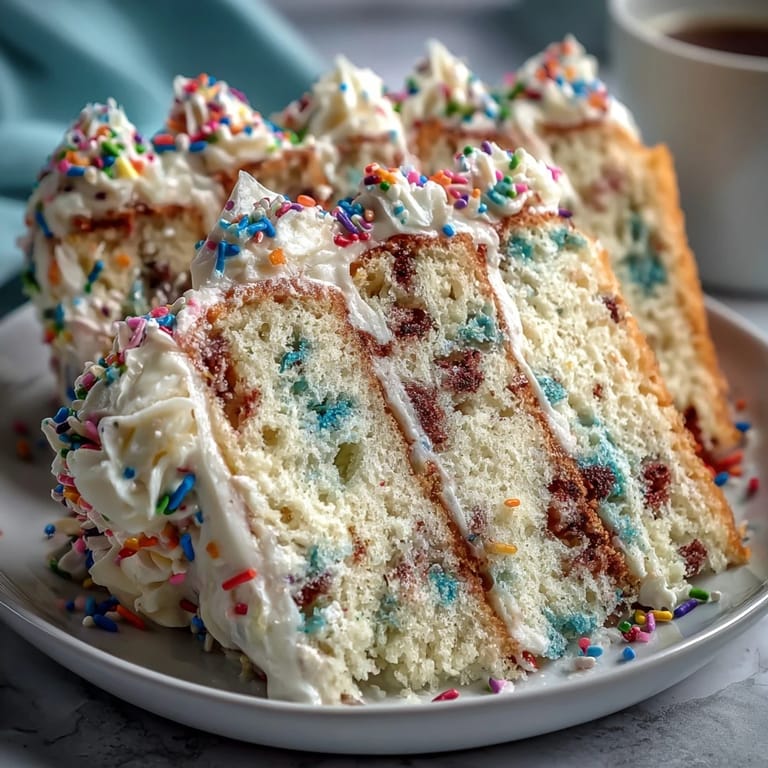
- Dollop colored frosting onto your cooled layers, then swirl them together with a spatula or offset knife to create a marbled pastel effect. The beauty is in the imperfection here.
 Pin It
 When I cut into that first finished cake and saw the pastel swirls against the flecked vanilla crumb, something clicked. Food doesn't have to be complicated to feel like love—it just has to taste good and make people smile when they see it.
Room Temperature Ingredients Really Matter
Cold butter won't cream properly, cold eggs can break the emulsion, and cold milk will shock the batter when added. Set everything out about an hour before you start mixing; it's the difference between a light, tender cake and one that feels heavy and slightly gritty. I learned this the hard way, making a batch at 7 a.m. when I grabbed ingredients straight from the fridge.
Why Sour Cream Is Non-Negotiable
Greek yogurt or regular yogurt will change the crumb structure because of different moisture and acid content. Sour cream specifically adds tang that makes the sweetness feel balanced instead of cloying, and it keeps the cake moist for days. The first time I tried a substitution to save money, the cake tasted flat and one-dimensional, and I've never risked it since.
Decoration Tips and Timing Tricks
If you're piping instead of swirling, chill your buttercream for 15 minutes so it holds peaks without slumping. You can make the cake layers a day ahead and stack and frost them the morning of serving—this also makes slicing cleaner because the crumb sets slightly. Room temperature frosting spreads easier, but chilled frosting pipes cleaner; pick your battle depending on your decoration style.
- If your frosting gets too soft while decorating, pop it back in the fridge for 10 minutes and keep working.
- Pastel gels go a long way—start with the tiniest dot on a toothpick and stir before adding more color.
- A hot offset spatula dipped in water helps smooth and blend colors together for an even more polished look.
 Pin It
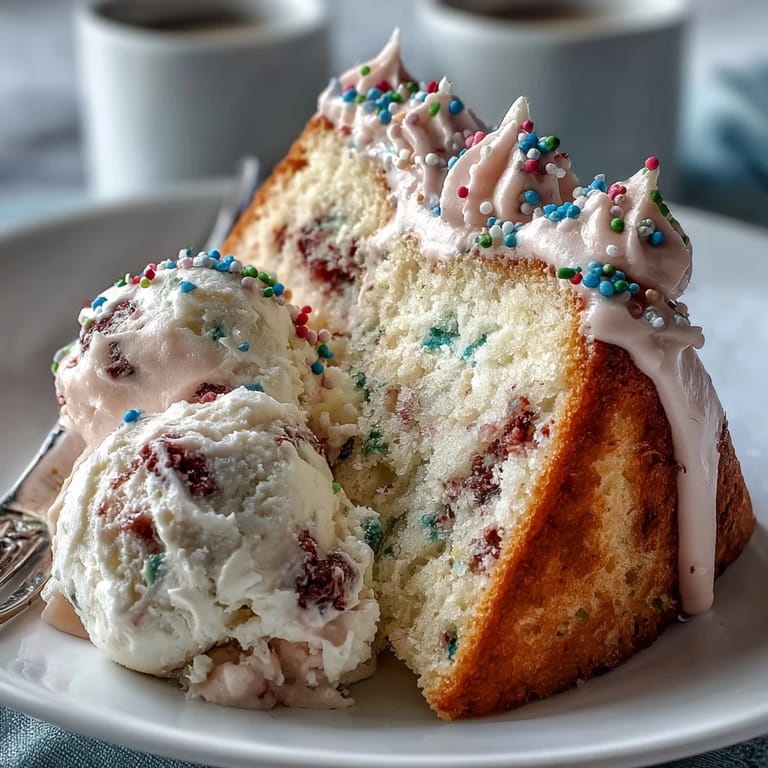
 This cake feels like springtime in a bite—delicate and bright and celebratory without trying too hard. Make it once and you'll understand why it becomes the first thing people ask you to bring to parties.
Recipe FAQs
- → How do I prevent sprinkles from bleeding color into the batter?
Use jimmies-style sprinkles rather than nonpareils, as they maintain color without bleeding when folded gently into the batter.
- → Can I substitute sour cream in the batter?
Yes, Greek yogurt can replace sour cream for similar moisture and tang while maintaining texture.
- → What is the best way to achieve pastel colors in buttercream?
Use food coloring gels sparingly and gradually blend into the buttercream until desired soft pastel shades are reached.
- → How should I bake this cake to ensure even rising?
Preheat the oven fully, grease and line pans with parchment, and bake in the center rack. Check doneness with a toothpick inserted in the middle.
- → What tools are essential for smooth buttercream frosting?
An electric mixer helps achieve a creamy smooth texture. For decorating, offset spatulas or piping bags provide control and expression.
- → Can this be made as cupcakes instead of a cake?
Yes, bake in cupcake pans for about 22-24 minutes and adjust decorating accordingly.