 Pin It
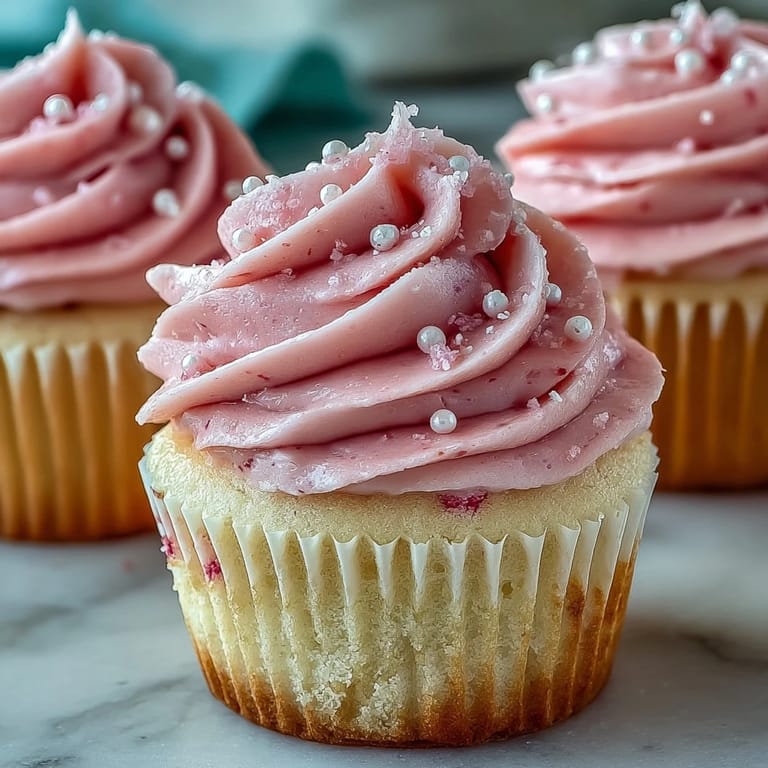
 A friend once asked me to bake something cheerful for her daughter's spring recital, and I panicked because I'd never made anything blush-pink before. I grabbed a bottle of gel coloring, crossed my fingers, and somehow turned out a batch of cupcakes so soft and pretty they nearly floated off the stand. The tangy buttermilk gave them this unexpected lightness, and the vanilla buttercream swirled on top like little clouds. Everyone kept asking if they were strawberry, but the magic was in the balance—sugar, tang, and that delicate crumb that melted the second it hit your tongue.
I made these again for a coworker's birthday, and she admitted she usually skips frosting because it's too heavy. But she ate two of these, buttercream and all, because the frosting was so airy it practically dissolved. That's when I realized the secret was beating the butter long enough and adding just enough cream to keep it from becoming dense. Now I make a double batch of frosting every time because people always want extra.
Ingredients
- Cake flour: This makes the cupcakes incredibly soft and fine-crumbed, but if you only have all-purpose, the cornstarch trick works beautifully.
- Baking powder and baking soda: The combo gives you lift and a tender texture, especially when paired with the acidic buttermilk.
- Unsalted butter: Room temperature is non-negotiable—it creams with the sugar to trap air, which makes the cupcakes light.
- Granulated sugar: Sweetens and helps create structure, but not so much that it overwhelms the delicate vanilla flavor.
- Egg: One large egg binds everything together and adds richness without making the batter heavy.
- Buttermilk: The tang balances sweetness and reacts with the leaveners for a soft, airy crumb.
- Vanilla extract: Pure vanilla is worth it here—it shines through in both the cupcake and the frosting.
- White vinegar: Just a teaspoon boosts tenderness and helps the food coloring distribute evenly.
- Pink gel food coloring: Gel is more concentrated than liquid, so you get vibrant color without thinning the batter.
- Powdered sugar: Sifting prevents lumps and makes the buttercream silky smooth.
- Heavy cream: A splash loosens the frosting just enough to make it pipeable and cloud-like.
Tired of Takeout? 🥡
Get 10 meals you can make faster than delivery arrives. Seriously.
One email. No spam. Unsubscribe anytime.
Instructions
- Prep your oven and tin:
- Preheat to 350°F and line your muffin tin with paper liners so the cupcakes release easily. This also keeps the edges soft instead of crispy.
- Sift the dry ingredients:
- Whisk together cake flour, baking powder, baking soda, and salt in a medium bowl. Sifting aerates the flour and prevents lumps in your batter.
- Cream butter and sugar:
- Beat the butter for a full minute until it's smooth, then add sugar gradually and beat for 2 to 3 minutes. The mixture should look pale and fluffy, almost like frosting itself.
- Add the egg and vanilla:
- Lightly beat the egg first, then drizzle it in slowly with the mixer on low so it doesn't scramble. Blend in the vanilla until everything smells warm and sweet.
- Alternate dry and wet ingredients:
- Add one-third of the flour mixture, then half the buttermilk, and repeat until everything is just combined. Scrape the bowl between additions and stop mixing as soon as you don't see streaks of flour.
- Tint the batter:
- Stir the vinegar and pink gel coloring together in a small cup, then pour it into the batter on low speed. Mix until the color is even and soft, like a blush.
- Fill the liners:
- Divide the batter evenly among the 12 liners, filling each about two-thirds full. Tap the pan gently on the counter to pop any air bubbles hiding in the batter.
- Bake until set:
- Bake for 18 to 22 minutes, checking with a toothpick at the 18-minute mark. The tops should spring back lightly when touched, and the toothpick should come out clean or with just a few moist crumbs.
- Cool completely:
- Let the cupcakes rest in the pan for 5 minutes to firm up, then move them to a wire rack. Frosting warm cupcakes will melt the buttercream into a puddle.
- Make the buttercream:
- Beat the butter until creamy, then add powdered sugar gradually on low speed to avoid a sugar cloud. Increase to medium and beat for 2 minutes, then add vanilla, cream, and salt and beat on medium-high until light and fluffy.
- Frost and decorate:
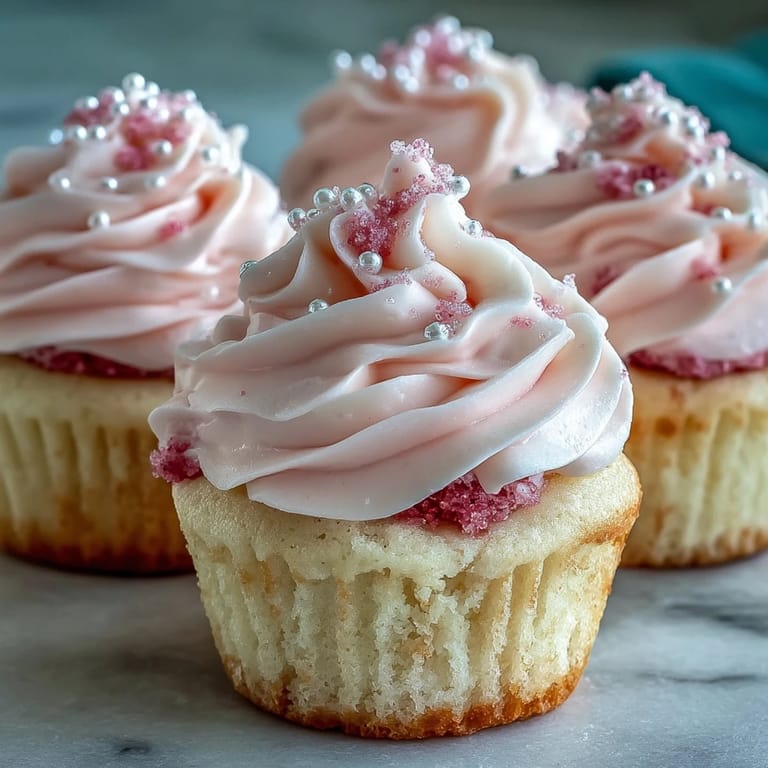
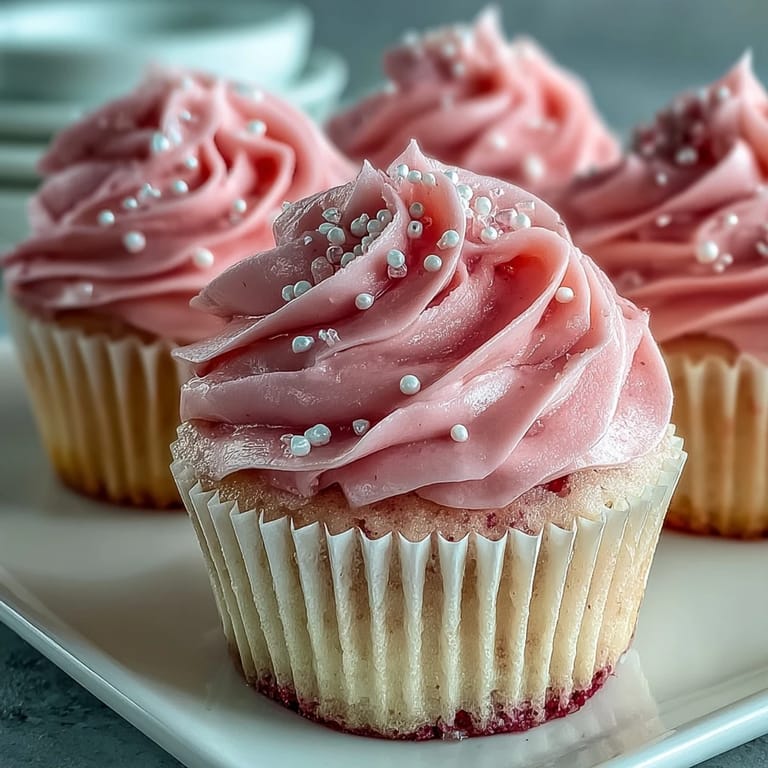
- Pipe or spread the buttercream onto each cooled cupcake, then finish with sprinkles, edible pearls, or pink sanding sugar. The frosting firms up slightly as it sits, making it easy to stack or transport.
 Pin It
 The first time I brought these to a potluck, someone said they tasted like a celebration, and I've never forgotten that. It wasn't just the pink color or the swirl of frosting—it was the way they felt special without trying too hard. Now I bake them whenever I want to make someone feel seen, because a pretty cupcake with a soft crumb can say more than words sometimes.
How to Store and Serve
Frosted cupcakes keep beautifully in an airtight container at cool room temperature for up to 2 days, or you can refrigerate them for up to 5 days if your kitchen runs warm. Let them sit at room temperature for 20 minutes before serving so the buttercream softens and the flavors wake up. Unfrosted cupcakes freeze well for up to 3 months—wrap each one in plastic wrap, then store them in a freezer bag and frost after thawing.
Customizing the Color and Flavor
If you want a deeper pink, add an extra quarter teaspoon of gel coloring, but go slowly because gel is potent and a little goes a long way. For a natural tint, swap the gel for a teaspoon of beet powder, though the color will be more subtle and earthy. You can also leave the cupcakes plain and tint only the frosting, or use different extracts like almond or lemon in place of vanilla for a flavor twist.
What to Do If Things Go Wrong
If your cupcakes dome too much, your oven might be running hot—use an oven thermometer to check the actual temperature. If they sink in the center, you may have overmixed the batter or opened the oven door too early, letting the heat escape before they set. If the frosting turns out grainy, the powdered sugar wasn't sifted or the butter was too cold—beat it longer on high speed, and it should smooth out.
- Always sift powdered sugar to avoid lumps in the buttercream.
- Use a toothpick test at the minimum bake time to avoid overbaking and drying out the cupcakes.
- Let the cupcakes cool fully before frosting, or the buttercream will slide right off.
 Pin It
 These cupcakes have a way of turning an ordinary day into something worth remembering, and I hope they do the same for you. Bake them with someone you love, or bake them just for yourself—either way, they're worth every minute.
Recipe FAQs
- → What makes pink velvet different from red velvet?
Pink velvet cupcakes achieve their delicate blush color through pink food coloring rather than the cocoa and red dye typically used in red velvet. The texture remains similarly tender and moist, with buttermilk providing a subtle tang that balances the sweet vanilla buttercream frosting.
- → How should I store these frosted cupcakes?
Store frosted cupcakes in an airtight container at cool room temperature for up to 2 days. Avoid refrigeration as it can dry out the cake and cause the buttercream to separate. If you need to keep them longer, store unfrosted cupcakes at room temperature and frost fresh before serving.
- → Can I make these cupcakes in advance?
Yes! You can bake the cupcakes up to 24 hours ahead. Cool completely, wrap tightly in plastic wrap, and store at room temperature. Make the frosting separately and keep it covered at room temperature. Frost the cupcakes shortly before serving for the freshest appearance and texture.
- → What creates the tender texture in these cupcakes?
The combination of cake flour, buttermilk, and proper mixing technique creates the signature tender crumb. Cake flour has lower protein content than all-purpose flour, while buttermilk adds moisture and subtle tang. Alternating dry and wet ingredients prevents overmixing, which keeps the texture airy and delicate.
- → Can I use natural coloring instead of gel food coloring?
Absolutely! For a natural pink hue, substitute beet powder for the gel food coloring. Start with ½ teaspoon and adjust until you achieve your desired shade. Keep in mind that natural colorings may produce a softer, more muted pink compared to vibrant gel colors.
- → Why do the ingredients need to be at room temperature?
Room-temperature ingredients emulsify more easily, creating a uniform batter that bakes evenly. Cold butter and eggs can cause the batter to curdle or separate, leading to dense or uneven cupcakes. Setting ingredients out about 30 minutes before baking ensures proper incorporation and optimal texture.