 Pin It
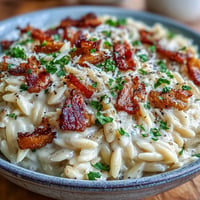
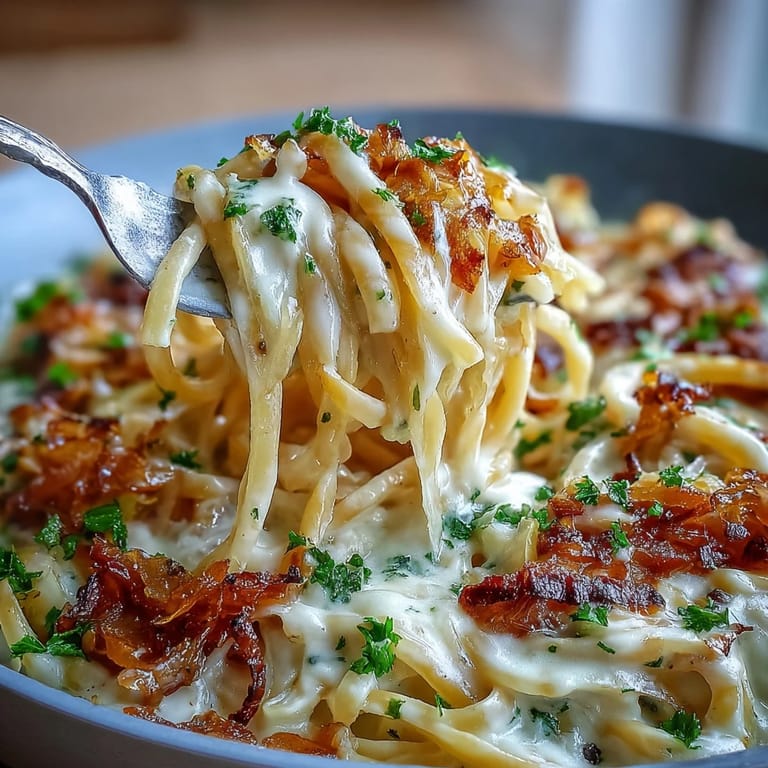
 The sizzle of cabbage in the skillet always stops me mid-chop—it's the sound that means something delicious is about to happen. I stumbled on the idea for this Caramelized Cabbage Carbonara one chilly evening when I had more cabbage than I knew what to do with and a craving for something decadent but meatless. The transformation as it goes golden and sweet against the richness of the cheese has me hooked every time. One bite and the smoky, creamy sauce takes me right back to that casual kitchen experiment. Little did I know it would become a regular request from friends who swore they never liked cabbage until now.
I remember making this for a little dinner gathering just as the first hints of spring had crept in, sunlight still lingering at six o'clock. While the cabbage browned in the pan, laughter bounced from the living room; I nearly forgot to stir it because someone was telling a story about a disastrous pasta adventure. When they sat down, plates steaming, nobody guessed the secret ingredient—until the second forkful, when the sweetness gave it away. Somehow, it made the night feel a bit brighter and the table more welcoming.
Ingredients
- Green cabbage: Choose a small, dense head—thinner slices cook faster and turn sweetly caramelized; don't rush this part, it's where the magic happens.
- Unsalted butter and olive oil: The duo builds depth and lets you caramelize without burning; butter brings silkiness while olive oil helps control the browning.
- Yellow onion (optional): Sometimes I add it for an extra hit of sweetness; just be sure to slice it thin so it melts right in.
- Garlic: I use two cloves, added at the end so they don't overcook and turn bitter—just fragrant and golden.
- Spaghetti or linguine: Both work, just aim for a pasta sturdy enough to stand up to the sauce and cabbage; don't overcook or your sauce clings less.
- Egg yolks and whole egg: The yolks make the sauce rich and glossy; whisk them with cheese off the heat so you get silk, not scrambled eggs.
- Parmesan or Pecorino Romano: Freshly grated melts best and gives that nutty, salty backbone; Pecorino lends a sharper edge if that's your thing.
- Black pepper and smoked paprika: A generous grind of pepper is classic; smoked paprika (just a pinch) adds a clever hint of smoky depth that mimics bacon.
- Salt: I always taste at the end—cheese and pasta water both add seasoning, so this is your finishing touch.
Tired of Takeout? 🥡
Get 10 meals you can make faster than delivery arrives. Seriously.
One email. No spam. Unsubscribe anytime.
Instructions
- Get the Pasta Going:
- Fill a large pot with salted water and bring it to a rolling boil, then drop in your pasta and cook until just al dente, saving a mugful of pasta water before draining.
- Caramelize the Cabbage:
- In a roomy skillet, melt butter and olive oil over medium heat, piling in the cabbage (and onion if using); stir every few minutes, letting it take on deep golden edges and an irresistible sweet aroma over 15-20 minutes, then add garlic and let it turn just fragrant.
- Mix Up the Sauce:
- In a bowl, whisk egg yolks, whole egg, grated cheese, pepper, and smoked paprika until smooth and dreamy; this is your shortcut to luxury.
- Combine Pasta and Veg:
- Tumble the drained pasta into the skillet over the cabbage, tossing gently; turn off the heat before moving to the next step.
- Form the Creamy Sauce:
- Working quickly, pour in the egg and cheese mixture, tossing with tongs while streaming in reserved pasta water until every noodle is coated in a glossy, creamy cloak.
- Season and Serve:
- Taste and adjust with salt and more pepper, then serve immediately with a snowy shower of extra cheese and a final peppery flourish.
 Pin It
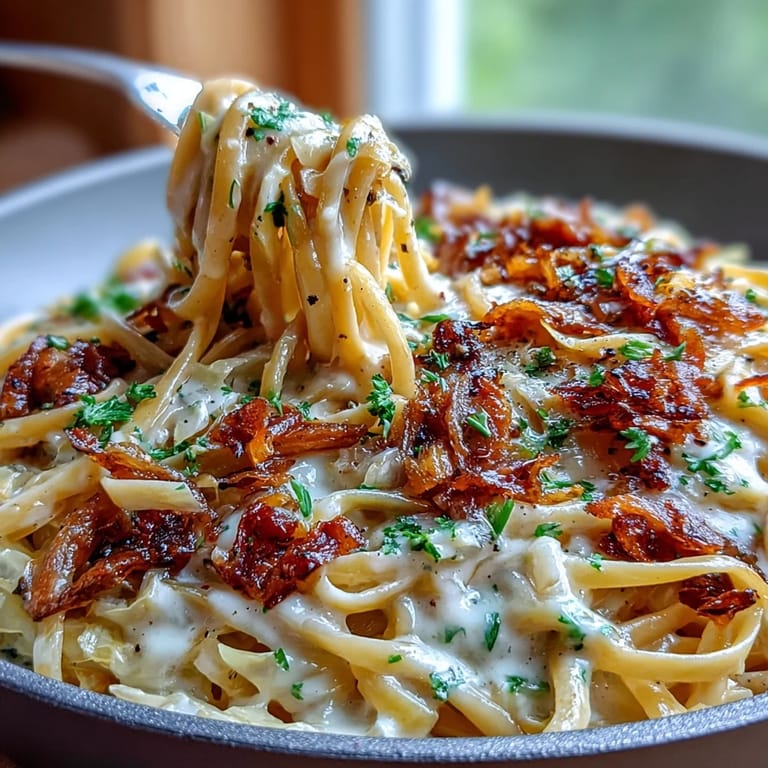
 The first time I served this to my sister, she paused after the first bite and asked if I’d snuck in bacon. When I told her it was the cabbage and a pinch of smoked paprika, we both cracked up. Moments like that remind me that a little kitchen curiosity can lead to new favorites and fun surprises around the table.
When to Add the Garlic for Best Flavor
Garlic burns fast and can turn harsh, so I always wait to add it just after the cabbage and (if using) onion have thoroughly caramelized. This way, the garlic turns aromatic and blends into the sweetness, not bitterness, of the vegetables—adding depth to the entire dish.
Tweaking the Seasonings to Your Taste
I’ve learned that the right amount of pepper can transform this pasta from good to wow, so I always grind it fresh and taste as I go. If you’re feeling adventurous, a tiny pinch of smoked paprika or even a hint of chili gives a new twist—just add slowly so it doesn’t overpower the dish.
Making It Your Own: Fun Variations
Once you get the method down, it’s easy to play around—swap in red cabbage for a pretty twist, or try a different cheese for a new vibe. Toss in a handful of crispy breadcrumbs or fried shallots before serving for that chef-y crunch everyone loves. Adding peas or wilted greens is a delicious way to stretch it and sneak in more vegetables.
- Stir the sauce quickly to avoid scrambled eggs.
- Don’t skip the pasta water—it's the key to creaminess.
- A generous topping of extra cheese makes every bowl feel special.
 Pin It
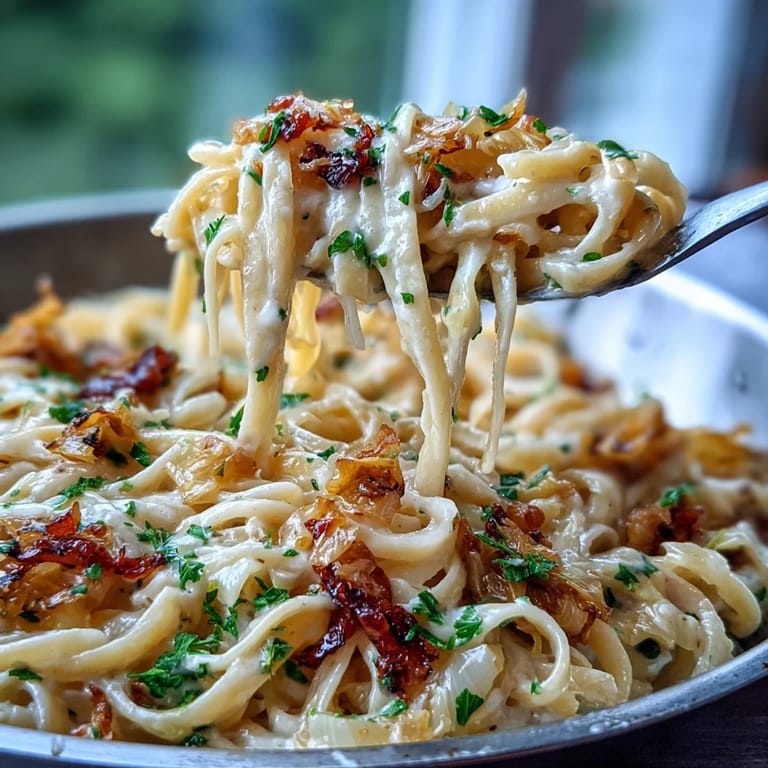
 This Caramelized Cabbage Carbonara knows how to make any evening feel a little more festive. Pour yourself something nice and savor every bite—you deserve it.
Recipe FAQs
- → How do I caramelize cabbage properly?
Cook thinly sliced cabbage slowly over medium heat with butter and olive oil, stirring occasionally until it becomes deeply golden and soft, typically 15-20 minutes.
- → What pasta works best for this dish?
Spaghetti or linguine are ideal as their shape and texture hold the creamy sauce well, balancing the cabbage flavor.
- → Can I add smoky flavor without smoked paprika?
Yes, smoked paprika is optional. You might use a dash of liquid smoke or add crispy bacon bits if not vegetarian.
- → How is the creamy sauce formed without cream?
The sauce comes from whisking egg yolks, whole egg, and grated cheese, combined quickly with hot pasta and a bit of reserved pasta water to create a smooth coating.
- → Is this dish suitable for vegetarians?
Yes, it uses caramelized vegetables and eggs with cheese; just ensure cheese and pasta fit your dietary needs.
- → What tips can improve flavor and texture?
Adding a splash of cream can enrich the sauce, and garnishing with fried shallots or vegan bacon bits adds crunch and complexity.